A task worth testing
Prioritize one opportunity against its frequency, quality needs and constraints.
In the handoff
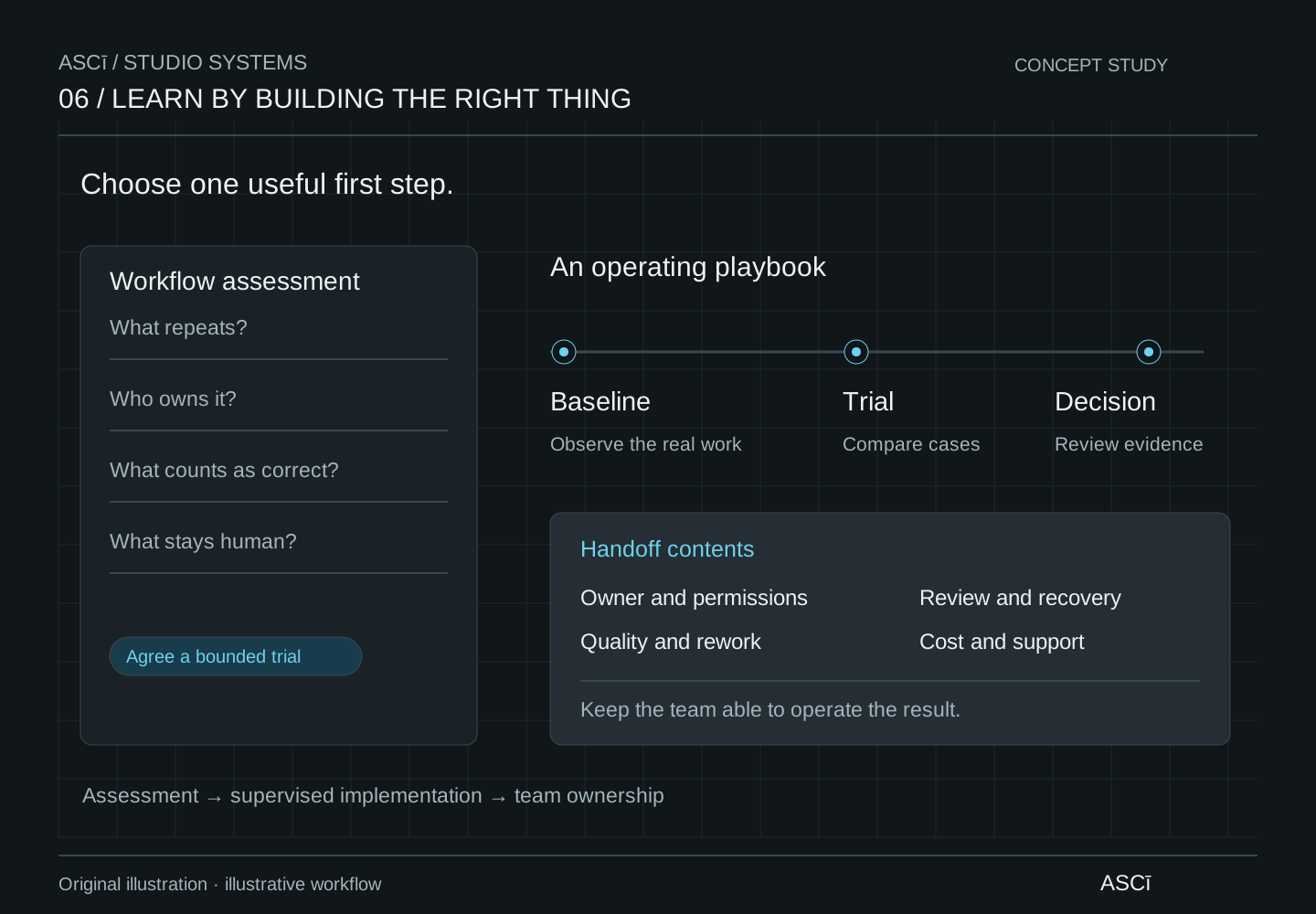
A workflow assessment and prioritized opportunity
AI strategy and team enablement
Choose a useful first task and give its owner a way to operate it.
For leaders and teams weighing AI opportunities against real process, quality and operating constraints.
01 / The task
There are many ideas but no agreed baseline, owner, evaluation set or decision about what should stay human.
Start with a real example of the work. We can then decide what needs a better process, a clearer interface or a focused build.
02 / A useful result
Agree the scope and acceptance checks before implementation. These are possible outputs, shaped around your task.
Prioritize one opportunity against its frequency, quality needs and constraints.
A workflow assessment and prioritized opportunity
Include review, correction and running cost alongside the first output.
A baseline and evaluation plan with costs and review time
Make responsibilities, limits and the next decision clear to the people doing the work.
A practical implementation or workshop with operating documentation
03 / A possible approach
Illustrative scenario. Scope and results depend on the actual process and systems.
A team can compare the time, quality and rework for a representative task before and after a supervised workflow change.
Explore a workflow example ↗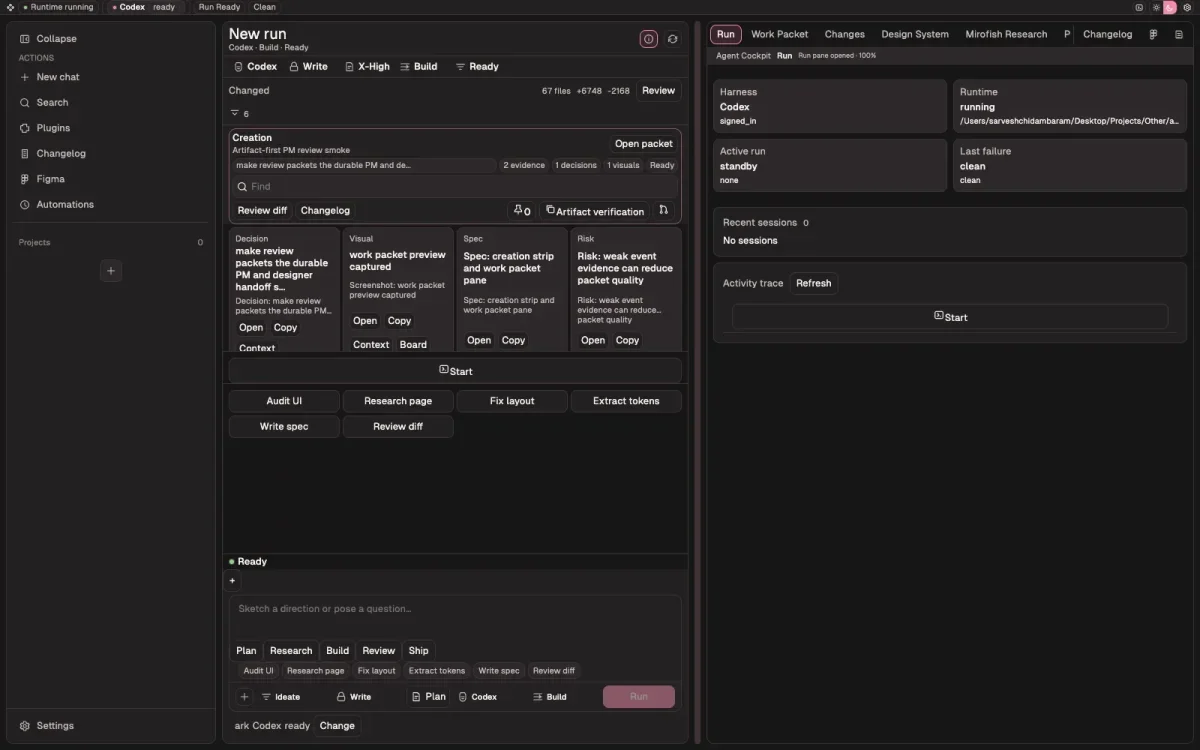
Selected work / Scope matters
Memi is a founder-built product. It shows our experience making tools and interfaces; it is not evidence of a client workshop or a promised productivity improvement.
Explore the founder-built product ↗04 / Working together
Scope, ownership, external costs and review points are agreed before work begins. A focused assessment can precede a build.
A process owner, representative examples, existing constraints and an agreed decision to make.
A defined task and agreed acceptance criteriaCompare a few representative cases against the baseline. Work with the operating team on a bounded pilot or practical workshop, including the work that should remain human.
A focused implementation or testable proposalWe compare like-for-like cases, include review and rework, and hand over the limits, ownership and next decision.
A prioritized task, evaluation notes, an operating guide and a clear next decision.We document ownership, operation and recovery. Continuing support or team enablement is agreed separately when needed.
05 / Before we begin
No. A fixed rule, a better interface or a process change may be a better fit. We select the approach for the task.
A process owner, a recent example of the work and the constraints that affect it. We shape the session around those real tasks rather than a general tour of tools.
Yes. A simpler rule, a clearer interface or a process change can be the better answer. The goal is a useful decision, not adoption for its own sake.
The next step
Tell us what happens today, who owns the work and what you would like to change. We’ll start there.
Start a conversation ↗