A journey people understand
Organize content and controls around the task someone came to complete.
In the handoff
Research and a clear journey for the people using it
Product and web design and development
Make a useful digital experience people can understand and use.
For teams launching a service, improving a customer journey or replacing a fragile internal tool.
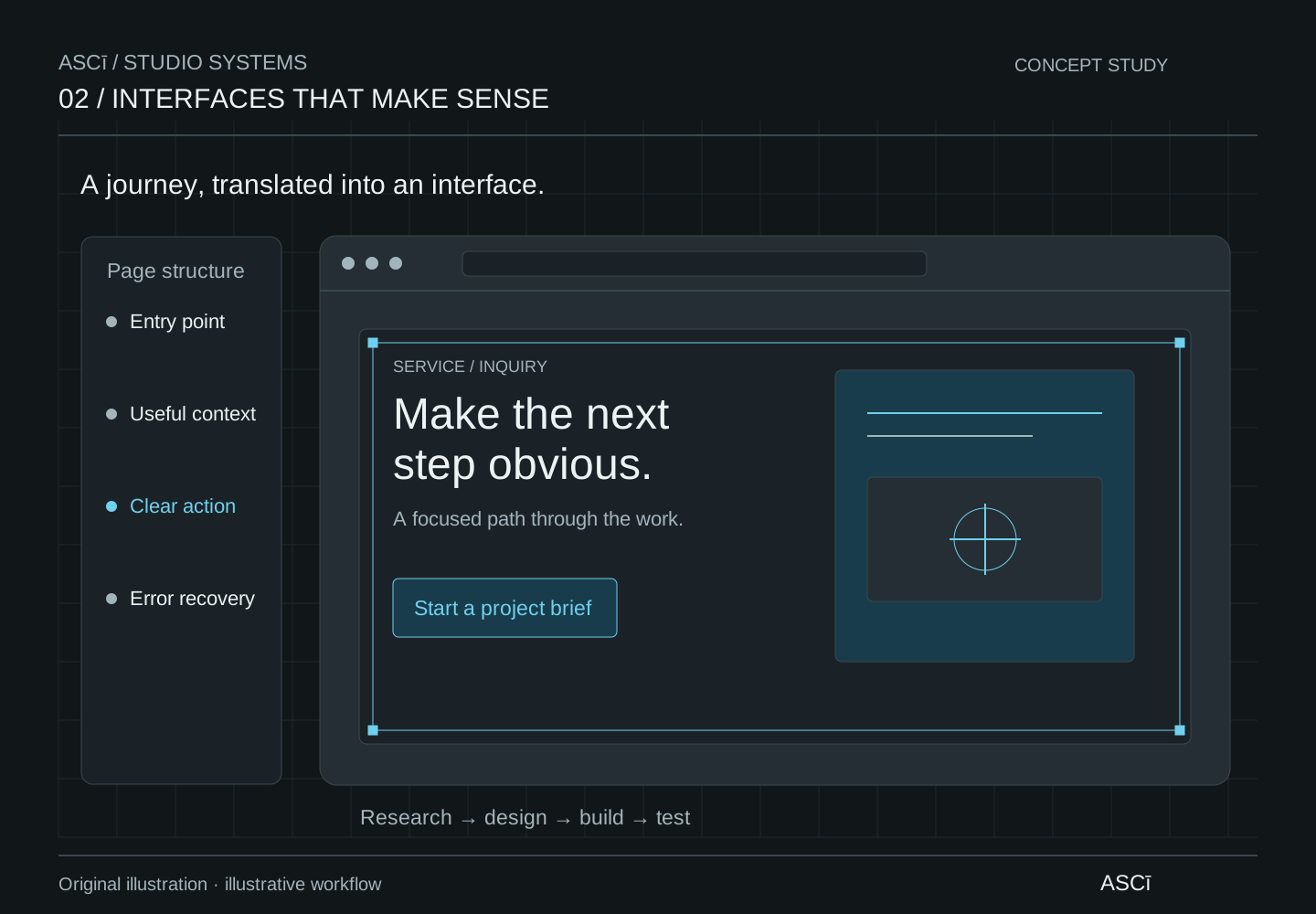
01 / The task
Visitors cannot find the next step, staff work around the interface, or a prototype has outgrown its implementation.
Start with a real example of the work. We can then decide what needs a better process, a clearer interface or a focused build.
02 / A useful result
Agree the scope and acceptance checks before implementation. These are possible outputs, shaped around your task.
Organize content and controls around the task someone came to complete.
Research and a clear journey for the people using it
Design the narrow screen, keyboard path and error state alongside the main view.
Interface design and working frontend or product functionality
Leave clear components, content ownership and acceptance criteria for the next change.
Responsive, accessible implementation and a documented handoff
03 / A possible approach
Illustrative scenario. Scope and results depend on the actual process and systems.
A service business could turn an email-heavy project intake into a clear request flow, with a usable fallback and a reviewable record.
Explore design work ↗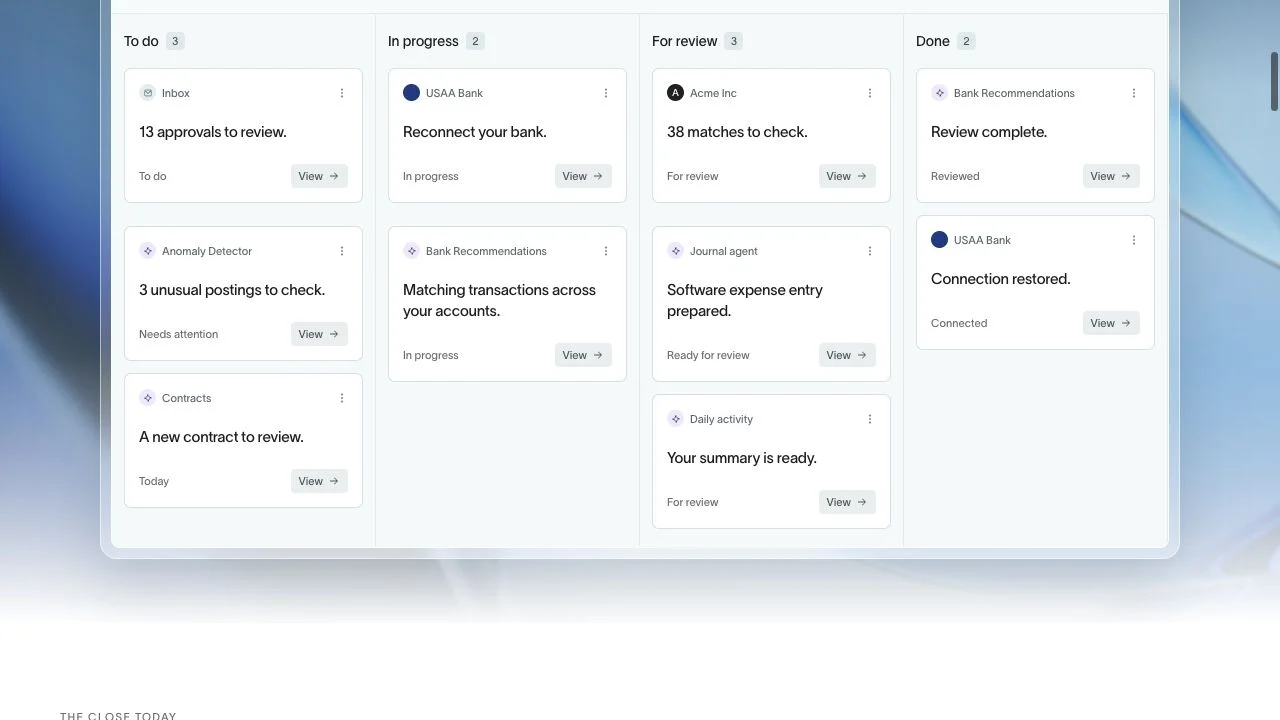
Selected work / Scope matters
A self-directed concept exploring task, agent and review states. These scenes are illustrative recreations, not shipped DualEntry product UI or an ASCī client engagement.
See the prototype and its scope ↗04 / Working together
Scope, ownership, external costs and review points are agreed before work begins. A focused assessment can precede a build.
The audience, current experience, representative tasks, content and any necessary system access.
A defined task and agreed acceptance criteriaWork from the key journey into interface directions and a working implementation. Review real content and interaction states together, rather than approving isolated screens.
A focused implementation or testable proposalWe agree task-based acceptance criteria, then test relevant devices, keyboard use, error states and integrations.
A responsive implementation, reusable interface patterns and task-based acceptance notes.We document ownership, operation and recovery. Continuing support or team enablement is agreed separately when needed.
05 / Before we begin
Yes. We first inspect what is already working, then agree whether to improve it or build a focused replacement.
Yes. A prototype can help resolve a journey or interaction before committing to implementation. We agree what it needs to answer and what remains outside its scope.
We agree ownership, content updates and support before the build. You receive the relevant source and operating documentation; ongoing support is scoped separately.
The next step
Tell us what happens today, who owns the work and what you would like to change. We’ll start there.
Start a conversation ↗