Shared definitions
Agree what a metric or research theme means before comparing it.
In the handoff
A research question and source inventory
Research and data systems
Turn scattered evidence into decisions your team can trace.
For teams making decisions from inconsistent records, disconnected reports or unanswered customer questions.
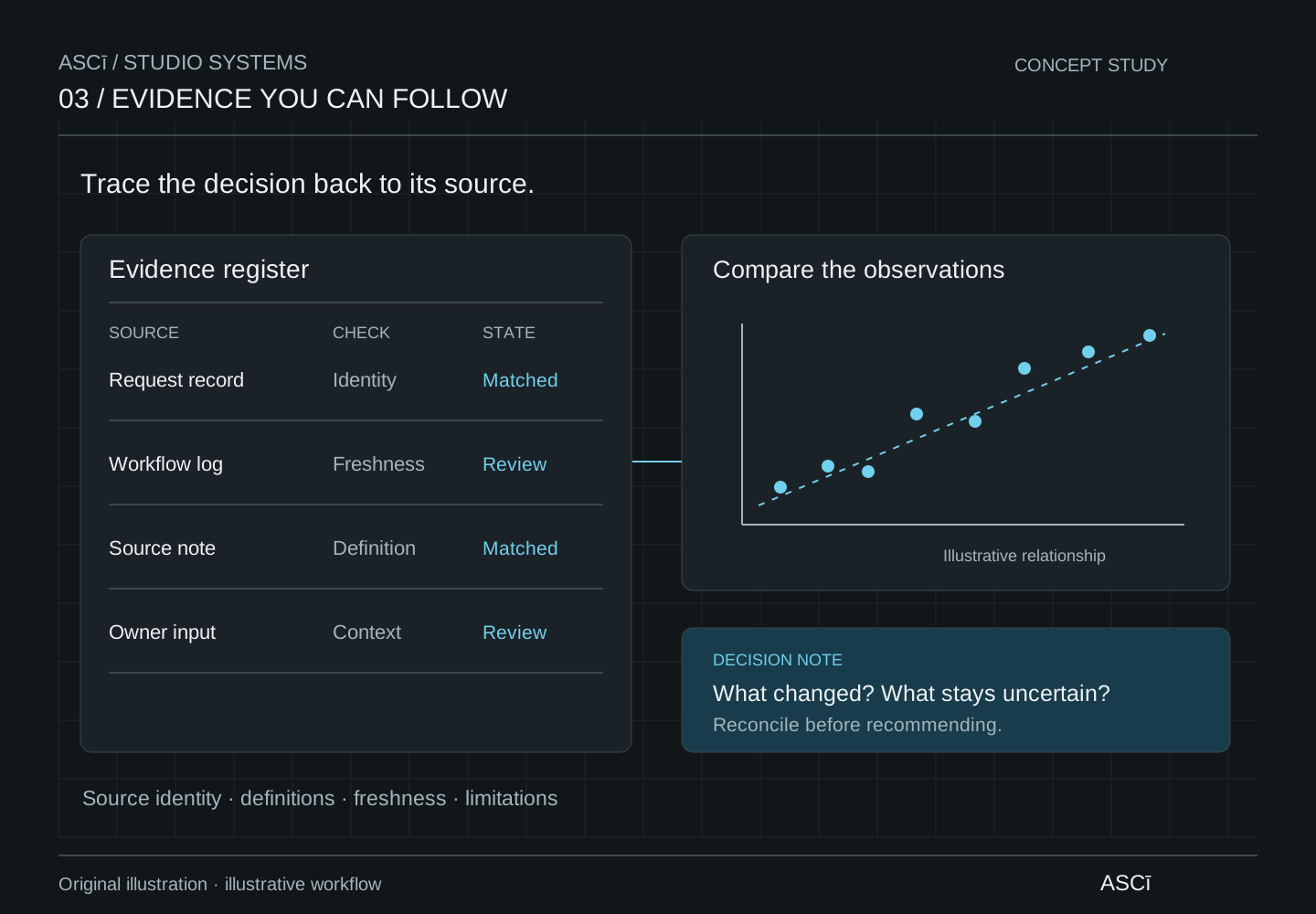
01 / The task
The same metric has different definitions, data is stale, or a recommendation cannot be traced back to evidence.
Start with a real example of the work. We can then decide what needs a better process, a clearer interface or a focused build.
02 / A useful result
Agree the scope and acceptance checks before implementation. These are possible outputs, shaped around your task.
Agree what a metric or research theme means before comparing it.
A research question and source inventory
Keep missing records, freshness and conflicting evidence in the decision.
Documented definitions, reconciliation and data quality checks
Connect the analysis to a concrete question and the next decision it supports.
A useful analysis or decision interface with evidence and limitations
03 / A possible approach
Illustrative scenario. Scope and results depend on the actual process and systems.
A team can reconcile inquiry sources and sales stages before deciding which channels deserve more attention.
Explore data work ↗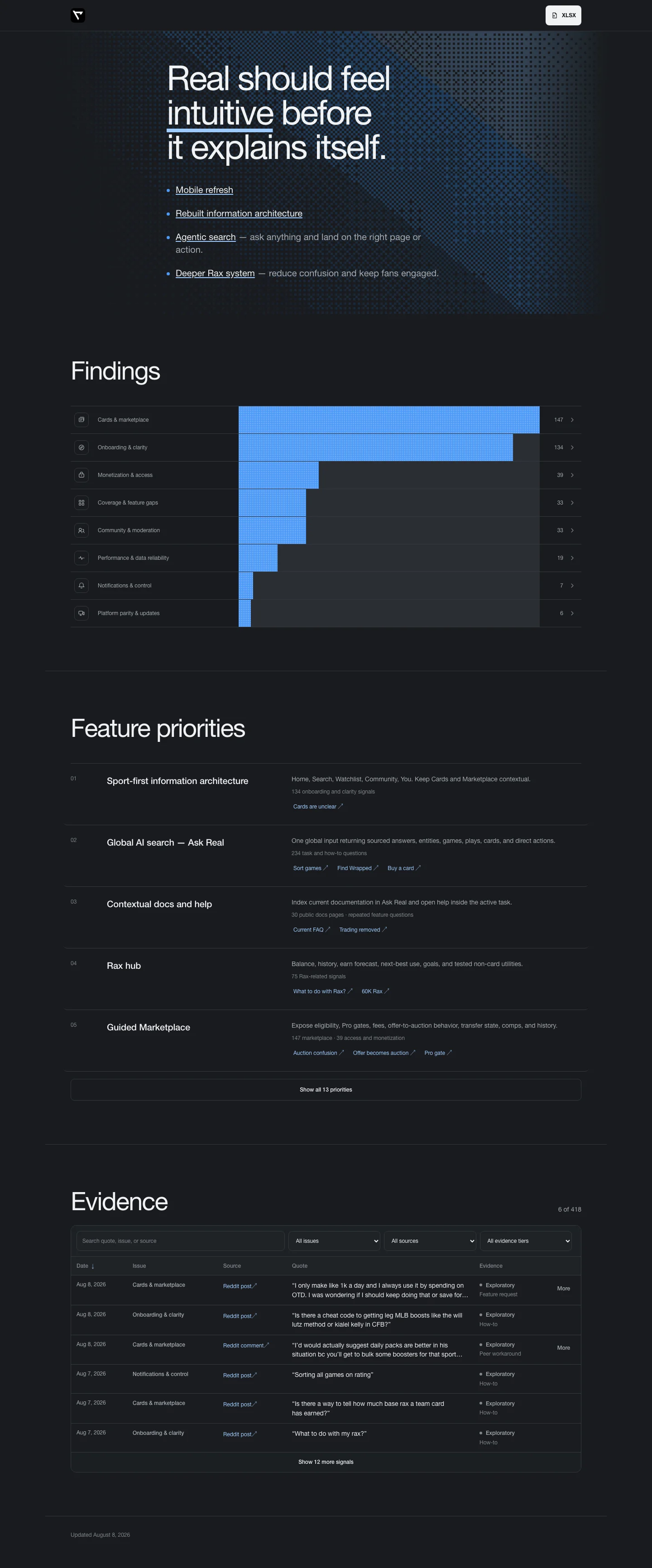
Selected work / Scope matters
Commissioned research synthesis and product strategy recommendations. This is a research handoff, not a shipped redesign or a claim about production outcomes.
Read the research and source limits ↗04 / Working together
Scope, ownership, external costs and review points are agreed before work begins. A focused assessment can precede a build.
A decision to support, sample records, access approved for the task and people who understand the data.
A defined task and agreed acceptance criteriaReconcile a representative slice, document the definitions and develop an analysis or interface around the decision. Investigate discrepancies before expanding the dataset.
A focused implementation or testable proposalWe compare calculations with source records, surface discrepancies and document freshness, assumptions and unresolved gaps.
Source inventory, reproducible analysis, quality checks and a decision-ready explanation of limits.We document ownership, operation and recovery. Continuing support or team enablement is agreed separately when needed.
05 / Before we begin
Yes. We make the gaps visible and agree what can be concluded before recommending additional collection.
Not necessarily. A concise research handoff, reconciled export or recurring report may answer the question more clearly. We choose the format after understanding the decision.
We agree the minimum data, access, storage and retention needed for the task before receiving it. Public examples do not require disclosure of your underlying records.
The next step
Tell us what happens today, who owns the work and what you would like to change. We’ll start there.
Start a conversation ↗